Senin, 07 Juli 2008

One Kind Of Japanese Tattoos is Dragon Styles


By Sara Smith

Truly one of the most majestic and magical of all the mythical beasts the dragon demands the attention it constantly receives in the world of tattoo designs. Dragon are prevalent design and symbolic elements throughout Asia including Chine and especially Japan. This has lead to a great deal of Japanese and Chinese artwork to use this mythical beasts as a central theme in their tattoo design work.

Possibly Design Ideas For Dragon Tattoos

There are really an endless number of possibilities when considering getting a dragon tattoo design. The size, style and location of the dragon can greatly change and enhance the symbolism behind the design. For example a dragon with fiery red eyes wrapped around a large sword might represent strength and power. Yet on the opposite end of the spectrum one depicted flying high in the clouds above a lake or the mountains might be a symbol for peace and freedom. What your dragon will symbolize is really dependent on the design and style you choose to give the dragon.

The History Of The Dragon In Japan

Dragons are one of the most important of all the mythological beats in Japanese culture. The Japanese of course have their own word for the dragon, they call them "Ryu" or "Tatsu". They are typically depicted as very long, skinny and full of scales very similar to a serpent. They also frequently are believed to live around large bodies of water. These creatures are so powerful that they are a god and to be revered. In fact the Japanese believed that their first emporer had descended from a dragon and therefore is partially a god and infallible.

The dragon is not only popular in Japan but throughout all of Asia including China, Korea and numerous other Asian countries. You can find dragon designs throughout the sculpture, architecture and art in Japan even to this day the dragon is still a very popular design.

One can see the long history and importance role that dragons play in the prevalent use of dragons throughout Japan. Today it is very common to see dragon sculptures at alters, temples and other places of worship. Miyajima is probably one of the most famous temples dedicated to the dragon. Miyajima means The Isle Of The Temple and is a popular place for religious pilgrimage, tourists and travelers to come and pray to the dragon god for good luck and good fortune. Another famous spot can be found at the Sonsoji Temple in Asakusa Japan.

At the Sensoji Temple the dragon sculpture is taken out each spring and paraded around the temple ground. Thousands of people from all over Japan come to see and participate in this huge festival. This is done to commemorate a major event. The story is about two brothers who in 628 AD were fishing along that bands of the Sumida river. During their fishing trip they accidentally discovered a beautiful statue of the Goddess of Mercy Kanon. It is said that a gold dragon flew up out of the river and into the sky once the discovery was made as a way to celebrate the wonderful finding.

In both Buddhist and Taoist religious traditions the dragon is seen to also represent the hardships that a spiritual pilgrim will have to face in their journey towards enlightenment.

The dragon can also be foudn throughout Japans great literary works and is a prevalent image. For example there is the famous tale of Yamata-No-Orochi (an eight headed serpent) and Susanoo (the man). Yamata-No-Orochi is an eveil beast that devours young women whole. Until Susanoo is able to trick the serpent. He gets the serpent drunk and then is able to successfully kill him.

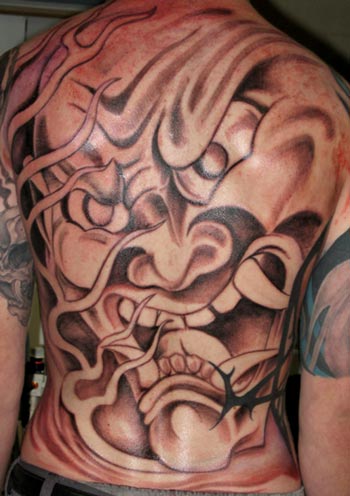
Japanese Dragon Tattoo Placement Since dragons are so prevalent through Japanese art, architecture, and literature there are many different even historically famous tattoo designs to choose from when contemplating getting a dragon tattoo. As far as location the most popular place is a very large full back piece. This allows for a lot of canvas space to truly depict the beauty and power of the mystical beast. You are not just locked into a large back piece however, as there are many different dragon tattoo designs to work with and you can get a tattoo anywhere on your body that you want. Typically calves, shoulders and sleeve tattoos also work well for dragon tattoos. The choice is up to you and what you want and what you are looking to express int he design.

About the Author:
Before you go out and get a Japanese Dragon Tattoo Design then you will want to check out this hot information site full of information. You might also like this site on Free Sta

The Most Popular Tattoo Designs for Girls


Girls are always asking me what tattoos they should get or what I think are the hottest tattoos for girls. Unfortunately there hosting aspnet no clear cut answer simply because there are as many different types of tattoos are there are girls. What one person might find sexy another might consider unattractive or very unfeminine.

Certain styles of tattoos might not suit the image you want to project. For example certain work environments may not accept highly visible tattoos even though tattoos are becoming more Consolidate debt loan student more accepted. It may be wise to hold off getting that sacred heart tattoo emblazoned across your chest if your boss is going to flip out if (s)he sees it!

So in saying that what I hope to do in that short article is offer my insight and salvation army car donations within the tattoo industry for the past 9 or 10 years and point out the current tattoo trends and what the most popular styles of tattoos are for girls. At the end of the day you want a tattoo that has lasting appeal and not a tattoo that was done on a whim. If I give you some good ideas for your next tattoo all the better...

Trends come and go. What was cool ten years ago is no longer cool. In the nineties certain types of tattoos such as cartoon characters like Betty Boop, barbed wire armbands and dolphins were accident claim Looking at them now they appear very cheesy and basic.

Tattoo art has come such a long way in the past few years even. Certain styles of tattoos have become perennial and have risen to a point where they are getting the respect and acknowledged they deserve for their intricacy and artistry.

Styles as diverse as Japanese tattoos, Indian/Hindu tattoos, Anime, Traditional American and Floral designs are raising the bar higher and higher and becoming increasingly popular.

Alongside that is the fact that persons are beginning to see their skin as a human canvas and not injury lawyers 4 you settling for random tattoos placed haphazardly on a part of the body that is hidden. Nowadays more and more girls are getting larger tattoos and more of them.

that may explain the popularity of Japanese tattoos. In traditional Japanese tattoos every character has a meaning and interacts with the other tattoo designs as part of the whole.

The same is true for Traditional American tattoos. Previously what were once done as individual tattoos from disparate elements of American culture are now being woven into an organic and is more like a story unfolding.

Top Five Most Popular Tattoos for Girls

Irezumi - Traditional Japanese tattoos - More and more girls are asking for large tattoo designs such as koi fish, dragons on their hips, back and arms.

Traditional American tattoos - Old school 'Sailor Jerry' tattoos and images such as classic American cars, pin-ups, swallows and nautical stars are becoming more popular on girls chests, abdomen, back and legs.

Floral tattoos - So many girls are getting flower tattoos as full sleeve tattoos or covering their entire back or legs with floral designs. Flower tattoo designs such as lotus flowers, peonies, orchids, chrysanthemums and flowering vines are the most popular.

Anime - Japanese animation has become massive and doesn't show any sign of disappearing any time soon. As a result Anime tattoos have become popular in the past five years or so. The only risk with Anime tattoo is that unlike other styles will probably age much quicker even though it looks great now.

Indian / Hindu tattoo designs - Like ancient Indian texts and spirituality being rediscovered by persons in the West since the 1960's it has been reflected in the demand for Indian tattoo designs. They say everything old become new again.

Finally the most important decision is not to get a tattoo on a whim or choose a tattoo that you think is cute or trendy. Give it a lot of thought. Good art should last. Think of Mona Lisa's smile...

www.tao-of-tattoos.com/inkedHundreds of Unique Tattoo Pictures & Designs

Best Japanese Tattoos And Design: "The Hot Looking Japanese Dragon Tattoos"


by Sara Smith

Truly one of the most majestic and magical of all the mythical beasts the dragon demands the attention it constantly receives in the world of tattoo designs. Dragon are prevalent design and symbolic elements throughout Asia including Chine and especially Japan. This has lead to a great deal of Japanese and Chinese artwork to use this mythical beasts as a central theme in their tattoo design work.

Possibly Design Ideas For Dragon Tattoos

There are really an endless number of possibilities when considering getting a dragon tattoo design. The size, style and location of the dragon can greatly change and enhance the symbolism behind the design. For example a dragon with fiery red eyes wrapped around a large sword might represent strength and power. Yet on the opposite end of the spectrum one depicted flying high in the clouds above a lake or the mountains might be a symbol for peace and freedom. What your dragon will symbolize is really dependent on the design and style you choose to give the dragon.

Dragon History In Japan

Dragons are a fundamental mythical animal or beast tot he Japanese people. In the Japanese language dragons are referred to as “Ryu” or often “Tatsu”. They of course are large yet slender serpent looking creatures. Often they live around large bodies of water such as the ocean of a big lake. They are well respected as a creature that has tremendous power and therefore the Japanese believe that the very first emperor of Japan had descended from a dragon and therefore is partially god himself.

The dragon is not only popular in Japan but throughout all of Asia including China, Korea and numerous other Asian countries. You can find dragon designs throughout the sculpture, architecture and art in Japan even to this day the dragon is still a very popular design.

Sculptures of dragons can be seen today throughout Japan typically in alters, temples and other places of worship. One of the most famous of these temples is at Miyajima also known as The Isle Of The Temple. This has become a famous spot for pilgrims, travelers and tourists to come and pray to the dragons for good luck and good fortune. Dragons are also revered at the Sonsoji Temple in Asakusa Japan.

Each spring the dragon is taken and paraded around the grounds of the Sensoji temple. During this festival thousands of people come from all over Japan to drop coins into a wooden box as a donation and gift to the temple and an offering to the dragon in hopes that the dragon will give them good luck. This festival is done each spring to commemorate the finding of the gold Kannon, an image of the goddess of mercy. It is believed that in 628 AD two brothers were fishing in the Sumida river at the time they discovered this beautiful statue of the Goddess of Mercy Kanon. At the time they discovered this legend states that gold dragons flew up out of the river and in to the sky to celebrate the discovery.

In the Buddhist and even many Taoist traditions the dragon is seen as a mythical beast that represents the hardships that people will have to face and eventually overcome before enlightenment can be obtained.

Dragons are also featured throughout Japanese literary works. One of the first appearances of a dragon like beast is the beast named Yamata-No-Orochi. Yamata No Orochi is a eight headed serpent like beast that devours young women. In the story a man named Susanoo tricks the beast and gets him drunk on Sake and then is able to slay him. In later literary works dragons are seen as much more benign creatures.

Japanese Dragon Tattoo Placement Since dragons are so prevalent through Japanese art, architecture, and literature there are many different even historically famous tattoo designs to choose from when contemplating getting a dragon tattoo. As far as location the most popular place is a very large full back piece. This allows for a lot of canvas space to truly depict the beauty and power of the mystical beast. You are not just locked into a large back piece however, as there are many different dragon tattoo designs to work with and you can get a tattoo anywhere on your body that you want. Typically calves, shoulders and sleeve tattoos also work well for dragon tattoos. The choice is up to you and what you want and what you are looking to express int he design.

About the Author:

The "Brief" In History of Japanese Tattoos


Like many Japanese traditions, Japanese tattoos go back centuries. Archeologists believe the early settlers of Japan, the Ainu people practiced the art of facial tattoos. Reports going back 1700 years tell about the Wa people who covered their entire bodies with tattoos.

However, since the introduction of Chinese religion in Japan such as Confucianism and Buddhism, tattoos in Japan have been looked upon as a barbaric act and usually attached with organized crime and lower class values. Criminals were marked with tattoos to identify them in society.

During the Edo period in 1603-1868, tattoo art became part of the Ukiyo-e; the floating world culture. Body tattoos were used by laborers and firemen as well as prostitutes who decorated their body with the art to lure their potential customers. In 1720, the practice of tattooing criminals became an official punishment under law. Rings were tattooed on their arms for each crime that was committed or a character tattoo adorned their forehead. This continued until 1870 under the Meji government of the new Japanese Emperor. The men who remained with their tattoos of punishment found themselves on the outskirts of society. The former criminals settled on the formation of gangs which eventually led to the beginning of the yakuza-organized criminals in Japan in the 20th century.

Today the majority of the Japanese population still relates tattoos with the yakuza and lower class lifestyles. However, the younger population is slowing tampering this belief as Japanese inspired tattoos are a popular form of the art.

By Christine Pinella

Did You Know The History of Japanese Tattoos?


By most accounts, tattooing in Japan may have begun as early as 500BC. During an archaeological excavation in 1977 a drawing of clay figures was discovered that clearly showed people who had facial tattoos. The purpose of the tattoos is quite varied. It’s believed that tattoos decorated the faces and bodies of divers and were used to protect them against large fish while they were in the water. It’s also believed that tattoos were used to ward off evil spirits. Additionally, tattoos were sometimes used as a way to punish and mark individuals that had broken tribal customs and traditions.

Regardless, most scholars agree that Japanese tattoos were originally used for decorative purposes and to distinguish the different social ranks of different individuals.

Japanese Tattoo Practices: Let’s Start at the Beginning

In 700BC Japanese and Chinese nobles disapproved of tattooing for decorative purposes because they believed altering the skin was disrespectful of their Confucian beliefs. They believed that individuals should not change the bodies they were born with and that doing so lowered their social status in the community. In ancient Japan the social community was very important. Tattooing someone was a very powerful form of punishment and was primarily used as a way to mark criminals. For example, criminals that were found guilty of breaking the law were tattooed on the forehead with the symbol of the dog after their 3rd offense. In some cases the left shoulder was tattooed with a circle, the right arm was marked with a double line, or the upper arm was marked with a double bar.

In addition to being placed on criminals, tattoos were also placed individuals from the lower classes. For example, people who assisted criminals, gravediggers, and executioners were tattooed. Also, people who engaged in unsavory work like tanners and slaughterers were tattooed but they were primarily tattooed as a way to identify and keep track of them.

As for women, they were sometimes tattooed with geometrical or abstract designs on their arms and legs. They were also tattooed with images of moustaches. The reasoning behind this practice was that the arms and legs work for the husband and the lips speak for him. At one point, tattooing the lips of women was very much in vogue and linked to one’s salvation after death.

Japanese Tattoos in the 1700’s

By the 1700’s tattooing was no longer solely linked to criminals or violent offenses. This was in part due to the fact that some criminals began hiding their tattoos by having them covered with more decorative tattoos. It was during this period that decorative tattoos became popular. Additionally, people began getting dedication tattoos on their bodies. It was common for prostitutes to get the names of their best clients tattooed on their inner arms or to have dots on their left elbows that signified their lovers’ age. Additionally, lovers pledged their undying love for one another with tattoos. In some cases the last stroke of the person’s name was lengthened to signify the strength of love felt by the wearer.

This same period saw the rise in popularity of religious tattoos. People began to have prayers and Buddhist incantations tattooed onto their bodies. Surprisingly enough, tattooing in general was banned by the government soon thereafter. However, people rebelled by getting tattoos placed in conspicuous areas of the body. Placing designs on the thigh or near the shoulder were popular choices.

Tattooing really grew in popularity in the period between 1750 and 1800. This is in part due to a popular book called The Water Margin which focused on an outlaw and his followers. In the book, the “hero” rebelled against the establishment and was heavily tattooed. Because the romanticism surrounding the lifestyle described in the book appealed to so many people in Japan several other books of this type were written and illustrated with woodblock prints. Interestingly enough, many of today’s Japanese tattoo designs (called irezumi) either come from these books or are based on designs found within the books.

Japanese Tattoos in the 1800’s

By 1868 the prohibition on tattoos was strengthened because it was believed that tourists from the West would disapprove of the practice. As a result, the government ordered many of the tattoo design books to be burned. However, many Westerners liked Japanese tattoos and showed an appreciation for the art form by getting the designs placed on their bodies. The most famous person to get a tattoo during this period was King George of England, who had a design of a dragon applied to his arm while on a visit.

Tattooing remained outlawed in Japan for everyone except foreigners until 1945. However, underground tattoo shops remained active the entire time.

Modern Day Japanese Tattoos

In 1945 an American tattoo artist Norman Keith Collins traveled to Japan and began incorporating scenes that included dragons and asian designs in his tattoos. He is also credited with introducing American tattoo techniques to Japan by trading needles and tattoo machines for Japanese designs and advice on application techniques.

It is argued that perhaps the Western influence on tattoos was more a curse than a blessing because it altered a traditional art form but it should be noted that although Japan now has thousands of tattoo shops that use American techniques many of the practices and designs found in Japanese tattoo studios today stay true to the old tradition.

http://freetattoopatternsonline.com